

Motive is a social enterprise with a mission to mitigate conflict and enhance stability and sustainability in communities around the globe. We work with government, private sector, and civil society partners to advance this mission through training & education, client programs, and pro-bono impact initiatives. This blog showcases our work and the social impact we’re having.
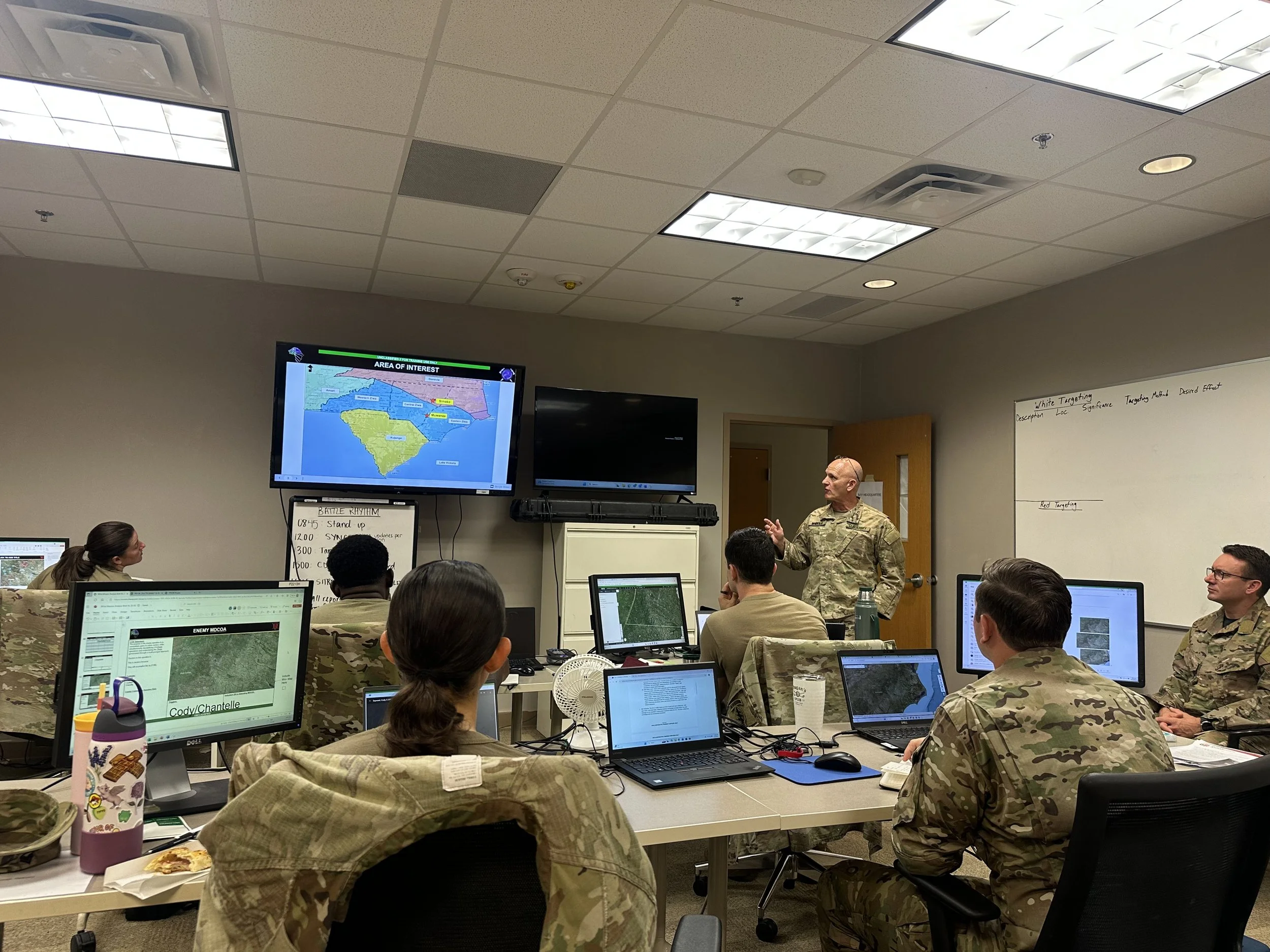
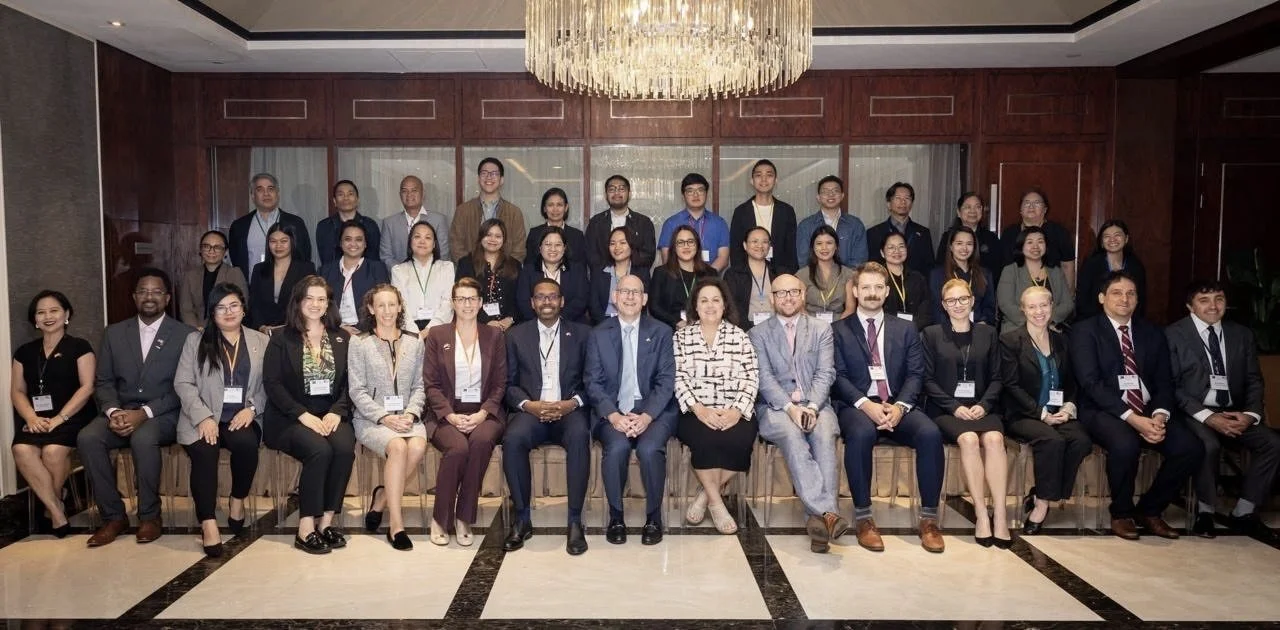
The PHL SIMEX validated that the Philippine Government's new FDI screening regime and policy position are sufficient to block high-stakes investments, such as the Chinese transaction in the national power grid. The exercise also highlighted key challenges, revealing that the IIPCC needs to improve interagency coordination, streamline bureaucratic procedures, and build capacity in mitigation strategy and negotiation tactics.
America was once a nation of stories. Freedom. Justice. The lone cowboy carving his own fate. The immigrant who builds something from nothing. The dream that anyone—anyone—could make it.

Adam Day advances a nearly unthinkable contention with his book States of Disorder, Ecosystems of Governance: failing states are not actually in disorder. Instead, he argues that failing states demonstrate a different kind of self-organization and that persistent instability is, in fact, the success of system organization—just a system oriented toward instability instead of stability.

Motive International hosted strategists, practitioners, software engineers, and researchers at the University of Mississippi's National Center for Narrative Intelligence for a Narrative Constructs in Joint Operations working group, a collaborative forum focused on examining the role of narrative as a strategic tool in modern military and information operations.


In 2021-22, Motive International was subcontracted by a large business prime contract holder to design and build an Atrocity Prevention (AP) tabletop exercise (TTX) for the U.S. State Department’s Bureau of Democracy, Human Rights and Labor (State/DRL). Delivered to State/DRL in September 2022, the TTX Motive developed today serves as the primary mechanism to fulfill the State Department’s Congressional mandate to train U.S. officials in AP as per the Eli Wiesel Genocide and Atrocities Prevention Act of 2018. Through immersive learning that measurably translates to real-world AP impacts, this project demonstrates Motive’s mastery harnessing the power of TTXs to advance our mission to mitigate conflict and bolster global stability.


In September 2022, the U.S. government’s Institute for Security Governance (ISG) hosted the week-long Panama Workshop at which Motive’s Ana Velsco served as an expert WPS facilitator. Designed to advance shared U.S.-Panama WPS goals, event participants included more than two dozen uniformed and civilian, male and female officials from different branches of Panama’s security agencies. Co-facilitators included officials from the U.S. Department of Defense (DoD) and academia.
Instead of informing Panamanian officials about the goals or principles of UNSCR 1325, co-facilitators sought to explore complex themes of gender and security through various framing questions. Why should a patrol officer guarding the Darien Gap think about gender? What use does a UN framework have for a police officer in the city of Colon? Is the WPS agenda -- often couched in the context of inter-state war -- even relevant for Latin America? As opposed to lecture-based approaches that can reduce gender and security to mere abstractions, the ensuing dialogue made WPS relevant, relatable, and durable.

Motive Subject Matter Expert Nathan Toronto shares how his recent experience advising the 3rd Security Force Assistance Brigade (3rd SFAB) and reflecting on “how the United States can reform military advising efforts to have a strategic effect, rather than achieving short-term tactical or operational gains that do not bear up under the weight of the overarching political conflict,” prompted him to consider the question “How does the Army know when an advisor is ready to deploy?”
As a new threat of war looms, Western leaders need a new security policy position to induce Moscow to de-escalate. This should include specific investments in Ukraine. Indeed, peace is cheaper than war.

This January and February, the 4th Security Force Assistance Brigade (SFAB) gave Motive the opportunity to build critical understanding among their personnel when they contracted us to provide embassy role players for their validation exercise ahead of a deployment to the European theatre. By the end of the two-week event, Motive earned widespread praise from the most senior and junior members of the training audience, including an SFAB team lead about to deploy for the first time who said, “I feel as though I could walk into any embassy in the world and do my job effectively because of what I learned.”


Participating alongside 100+ global social entrepreneurs and changemakers, Motive formed a civilian-military team and participated in a 2-day virtual Impactathon August 21-22, 2020, taking second place among 25 teams for the most innovative approach to addressing extreme poverty.
Hosted by the NGOs Innov8Social and Join the Journey, the Impactathon challenged teams of participants to produce a social enterprise business model in less than 48 hours that could contribute to the UN Sustainable Development Goal #1 to end poverty in all forms by 2030.

“Because of COVID, we shifted from in-person course delivery to Motive’s pandemic-proven all-virtual (online) course format,” Motive’s CEO, Morgan Keay explained. “But more importantly, when we learned about the unit’s urgent tasking to examine a particular evolving conflict, we proposed building a custom real-world scenario into the event at no additional cost. The idea was to maximize the unit’s investment in training and optimize impact by turning the final day of TCS into an action-oriented analytic and planning workshop. To co-facilitate alongside our SME instructors, we invited three world-leading academic and policy experts in the topic the unit had been directed to tackle.”

Responding rapidly to DoD's need for remote training to maintain force readiness, our Subject Matter Experts (SMEs) and tech innovators adapted Motive’s signature courses to a fully virtual format. Since April, we’ve executed multiple iterations of highly-interactive online courses to soldiers and Marines working from home, quarantined on deployment, or constrained to virtual battle assemblies and drills. Find out more and see if these courses are right for your mission!

The current mass exodus of Venezuelans fleeing violence, economic collapse, and political instability in their home country is the largest migratory movement in Latin American history. Desperate to identify more effective and holistic policy and programmatic options to address the Venezuelan Migrant crisis, stakeholders in the region have expressed a need for a systems-level analysis to inform better strategies. This need inspired our team to conduct desk-based and in-country research relying on the rigorous and participatory Transforming Crisis Systems (TCS) approach.

Since the toppling of their regime in 2001, the Taliban have demanded recognition from Kabul as a legitimate political actor in a country where they enjoy substantial support among segments of the population, not least for for the economic and infrastructural systems they helped cultivate and on which nearly all rural Afghans depend. The Taliban have a near monopoly on a global commodity representing a $4 billion dollar a year industry that necessitates the sustainment of elaborate supply chains: opium. But a deeper conflict analysis foretells a future in which the Taliban could soon be incentivized not only to walk away from its lucrative drug empire but become an ardent counter-narcotics partner to the Kabul government and its international backers.

In May 2017, Motive CEO Morgan Keay was a featured panelist at the Center for Strategic and International Studies (CSIS) at an event entitled “The Role of Multi-Sector Partnerships in the New Development Era.” CSIS hosted this half-day event at the start of the Trump Administration when U.S. foreign assistance budgets faced significant cuts. The panel Morgan spoke on was asked to explore creative options to better leverage capital – financial or otherwise – through cross-sector partnerships, specifically in conflict-affected and fragile states.
Opening her remarks with the statement, “Conflict affects all sectors of society and therefore takes all sectors of society to address." Morgan confronted an idea considered to be heretical by many in the international development and diplomacy communities: expanded partnerships with the military can advance development and humanitarian goals. To make the case, Morgan offered a story about a real-world case study: a World Bank-funded road construction project through the heart of extremist-affected territory in West Africa’s Lake Chad Basin. This example illustrates what happened when local civil society, the host country’s military, and the U.S. military came together around a violence-plagued infrastructure project to transform human security in the region.

All original articles are licensed under a Creative Commons Attribution-NonCommercial 4.0 International License.
VIEW BY CATEGORY
Training & Education
Programs
Impact Initiatives
Thought Leadership