
Our Work: Thought Leadership
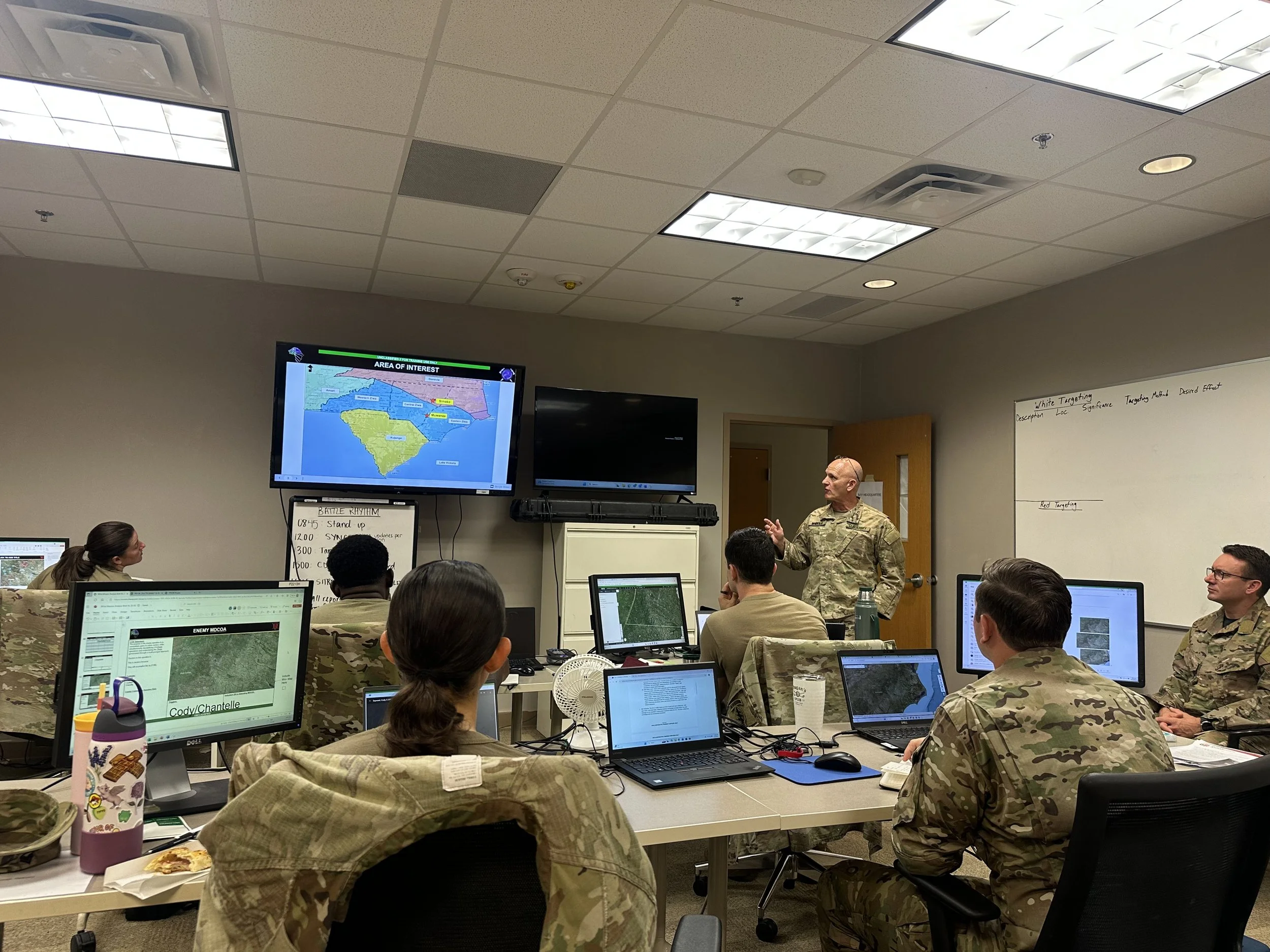
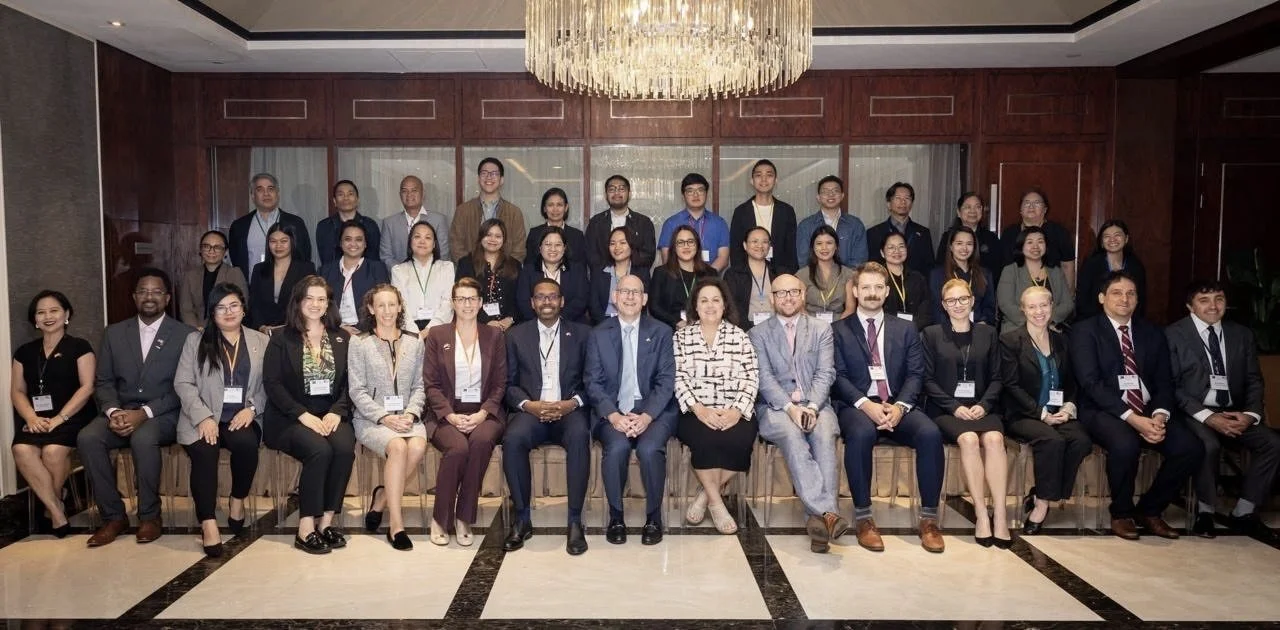
The PHL SIMEX validated that the Philippine Government's new FDI screening regime and policy position are sufficient to block high-stakes investments, such as the Chinese transaction in the national power grid. The exercise also highlighted key challenges, revealing that the IIPCC needs to improve interagency coordination, streamline bureaucratic procedures, and build capacity in mitigation strategy and negotiation tactics.
America was once a nation of stories. Freedom. Justice. The lone cowboy carving his own fate. The immigrant who builds something from nothing. The dream that anyone—anyone—could make it.

Adam Day advances a nearly unthinkable contention with his book States of Disorder, Ecosystems of Governance: failing states are not actually in disorder. Instead, he argues that failing states demonstrate a different kind of self-organization and that persistent instability is, in fact, the success of system organization—just a system oriented toward instability instead of stability.

Motive International hosted strategists, practitioners, software engineers, and researchers at the University of Mississippi's National Center for Narrative Intelligence for a Narrative Constructs in Joint Operations working group, a collaborative forum focused on examining the role of narrative as a strategic tool in modern military and information operations.


In September 2022, the U.S. government’s Institute for Security Governance (ISG) hosted the week-long Panama Workshop at which Motive’s Ana Velsco served as an expert WPS facilitator. Designed to advance shared U.S.-Panama WPS goals, event participants included more than two dozen uniformed and civilian, male and female officials from different branches of Panama’s security agencies. Co-facilitators included officials from the U.S. Department of Defense (DoD) and academia.
Instead of informing Panamanian officials about the goals or principles of UNSCR 1325, co-facilitators sought to explore complex themes of gender and security through various framing questions. Why should a patrol officer guarding the Darien Gap think about gender? What use does a UN framework have for a police officer in the city of Colon? Is the WPS agenda -- often couched in the context of inter-state war -- even relevant for Latin America? As opposed to lecture-based approaches that can reduce gender and security to mere abstractions, the ensuing dialogue made WPS relevant, relatable, and durable.

Motive Subject Matter Expert Nathan Toronto shares how his recent experience advising the 3rd Security Force Assistance Brigade (3rd SFAB) and reflecting on “how the United States can reform military advising efforts to have a strategic effect, rather than achieving short-term tactical or operational gains that do not bear up under the weight of the overarching political conflict,” prompted him to consider the question “How does the Army know when an advisor is ready to deploy?”
As a new threat of war looms, Western leaders need a new security policy position to induce Moscow to de-escalate. This should include specific investments in Ukraine. Indeed, peace is cheaper than war.


The current mass exodus of Venezuelans fleeing violence, economic collapse, and political instability in their home country is the largest migratory movement in Latin American history. Desperate to identify more effective and holistic policy and programmatic options to address the Venezuelan Migrant crisis, stakeholders in the region have expressed a need for a systems-level analysis to inform better strategies. This need inspired our team to conduct desk-based and in-country research relying on the rigorous and participatory Transforming Crisis Systems (TCS) approach.

Since the toppling of their regime in 2001, the Taliban have demanded recognition from Kabul as a legitimate political actor in a country where they enjoy substantial support among segments of the population, not least for for the economic and infrastructural systems they helped cultivate and on which nearly all rural Afghans depend. The Taliban have a near monopoly on a global commodity representing a $4 billion dollar a year industry that necessitates the sustainment of elaborate supply chains: opium. But a deeper conflict analysis foretells a future in which the Taliban could soon be incentivized not only to walk away from its lucrative drug empire but become an ardent counter-narcotics partner to the Kabul government and its international backers.

In May 2017, Motive CEO Morgan Keay was a featured panelist at the Center for Strategic and International Studies (CSIS) at an event entitled “The Role of Multi-Sector Partnerships in the New Development Era.” CSIS hosted this half-day event at the start of the Trump Administration when U.S. foreign assistance budgets faced significant cuts. The panel Morgan spoke on was asked to explore creative options to better leverage capital – financial or otherwise – through cross-sector partnerships, specifically in conflict-affected and fragile states.
Opening her remarks with the statement, “Conflict affects all sectors of society and therefore takes all sectors of society to address." Morgan confronted an idea considered to be heretical by many in the international development and diplomacy communities: expanded partnerships with the military can advance development and humanitarian goals. To make the case, Morgan offered a story about a real-world case study: a World Bank-funded road construction project through the heart of extremist-affected territory in West Africa’s Lake Chad Basin. This example illustrates what happened when local civil society, the host country’s military, and the U.S. military came together around a violence-plagued infrastructure project to transform human security in the region.

Military personnel facing a first TDY or assignment to a U.S. Embassy abroad are often concerned about how they will fit in, and more importantly, succeed in an unfamiliar environment. It is true that a typical U.S. Embassy works very differently from the Pentagon, Fort Bragg, or Naval Base Coronado. But you don’t need an Enigma machine to crack the diplomatic code and find success; all it takes is a little background and preparation. As an FSO for 35 years who retired as U.S. Ambassador to Kosovo, Greg Delawie spent the majority of his career working closely with U.S. military personnel from all services and many specialties, both in Washington and at posts abroad and offers insights to help empower incoming military personnel to transition smoothly into diplomatic culture.