
Our Work: Training & Education
Training and education is an integral part of how Motive advances our mission to mitigate global conflict and instability. Our training audiences include U.S. and international civilian and military officials, civil society, and the private sector.
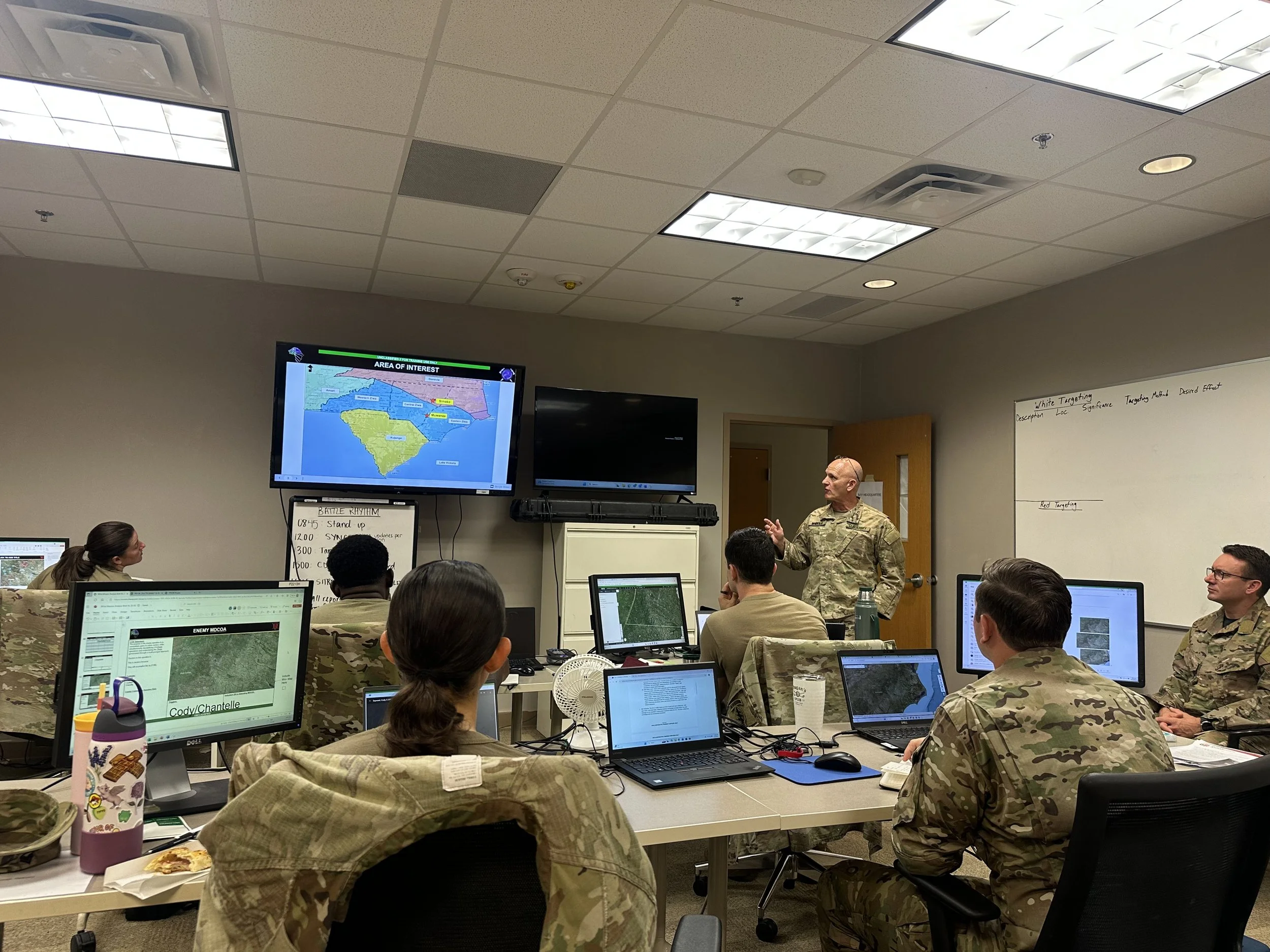
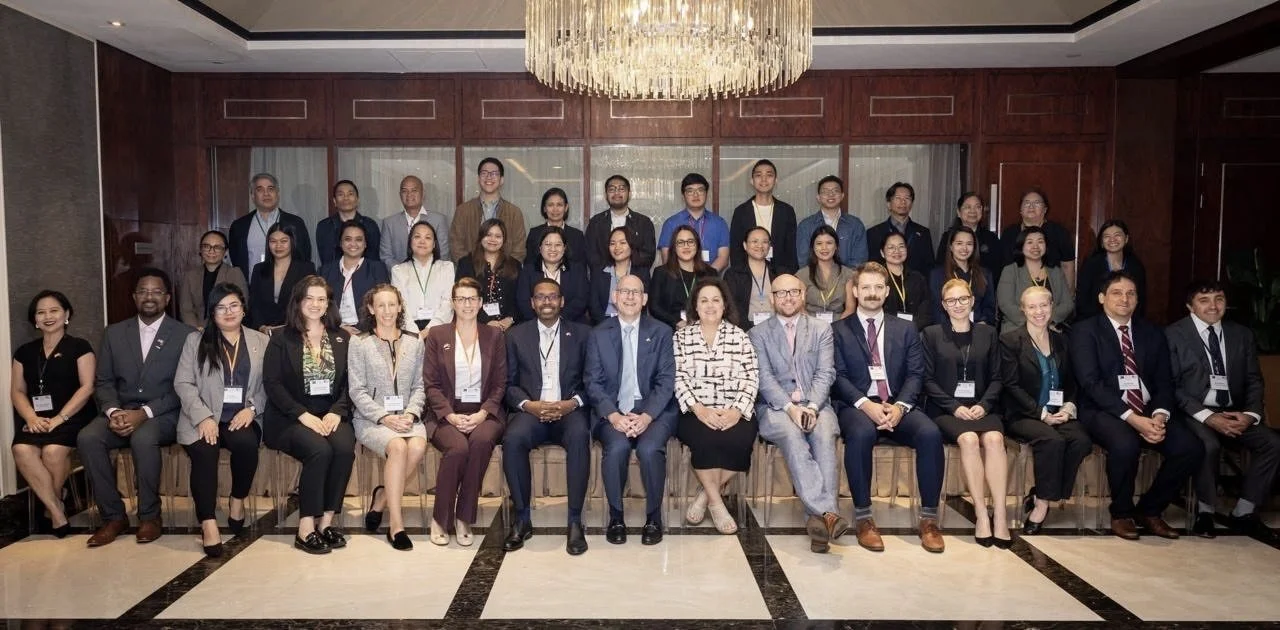
The PHL SIMEX validated that the Philippine Government's new FDI screening regime and policy position are sufficient to block high-stakes investments, such as the Chinese transaction in the national power grid. The exercise also highlighted key challenges, revealing that the IIPCC needs to improve interagency coordination, streamline bureaucratic procedures, and build capacity in mitigation strategy and negotiation tactics.

Participating alongside 100+ global social entrepreneurs and changemakers, Motive formed a civilian-military team and participated in a 2-day virtual Impactathon August 21-22, 2020, taking second place among 25 teams for the most innovative approach to addressing extreme poverty.
Hosted by the NGOs Innov8Social and Join the Journey, the Impactathon challenged teams of participants to produce a social enterprise business model in less than 48 hours that could contribute to the UN Sustainable Development Goal #1 to end poverty in all forms by 2030.

“Because of COVID, we shifted from in-person course delivery to Motive’s pandemic-proven all-virtual (online) course format,” Motive’s CEO, Morgan Keay explained. “But more importantly, when we learned about the unit’s urgent tasking to examine a particular evolving conflict, we proposed building a custom real-world scenario into the event at no additional cost. The idea was to maximize the unit’s investment in training and optimize impact by turning the final day of TCS into an action-oriented analytic and planning workshop. To co-facilitate alongside our SME instructors, we invited three world-leading academic and policy experts in the topic the unit had been directed to tackle.”

Responding rapidly to DoD's need for remote training to maintain force readiness, our Subject Matter Experts (SMEs) and tech innovators adapted Motive’s signature courses to a fully virtual format. Since April, we’ve executed multiple iterations of highly-interactive online courses to soldiers and Marines working from home, quarantined on deployment, or constrained to virtual battle assemblies and drills. Find out more and see if these courses are right for your mission!

The current mass exodus of Venezuelans fleeing violence, economic collapse, and political instability in their home country is the largest migratory movement in Latin American history. Desperate to identify more effective and holistic policy and programmatic options to address the Venezuelan Migrant crisis, stakeholders in the region have expressed a need for a systems-level analysis to inform better strategies. This need inspired our team to conduct desk-based and in-country research relying on the rigorous and participatory Transforming Crisis Systems (TCS) approach.

Since the toppling of their regime in 2001, the Taliban have demanded recognition from Kabul as a legitimate political actor in a country where they enjoy substantial support among segments of the population, not least for for the economic and infrastructural systems they helped cultivate and on which nearly all rural Afghans depend. The Taliban have a near monopoly on a global commodity representing a $4 billion dollar a year industry that necessitates the sustainment of elaborate supply chains: opium. But a deeper conflict analysis foretells a future in which the Taliban could soon be incentivized not only to walk away from its lucrative drug empire but become an ardent counter-narcotics partner to the Kabul government and its international backers.

Overcoming a legacy of broken pledges is just one of many hurdles in any future journey towards conceiving, authorizing, resourcing then carefully cultivating BW&T partnerships with any future partner. Yet instead of developing processes to ensure these myriad challenges are overcome, gut instinct and partisan politics still dominate U.S. decision-making on partnered operations, while informed analytic approaches to assess the risks, rewards, and requirements for successful BW&T are absent. Though there is no avoiding realpolitik, history makes a compelling demand for better tools to answer the critical questions of with whom, why, how and when to invest (or divest) from BW&T operations. One possible option: Motive International’s Social Contract Assessment Tool (SCAT).

In April and May of 2019, a team of Motive International experts composed of Dr. Salamah Magnuson, Morgan Keay and Kimberly Metcalf conducted an investigation of societal dynamics in Estonia through in-country field research focused on social cohesion and national security. The purpose of this initiative was to apply Motive’s Social Contract Assessment Tool (SCAT), a framework designed to identify and characterize social institutions and the sources of legitimacy that underpin them in transitioning or threatened societies in order to inform policies, plans and activities to mitigate threats and promote stability.